Inbox Zero
Free for noncommercial use under PolyForm Noncommercial 1.0.0; commercial use needs a licence from Rico. View the source
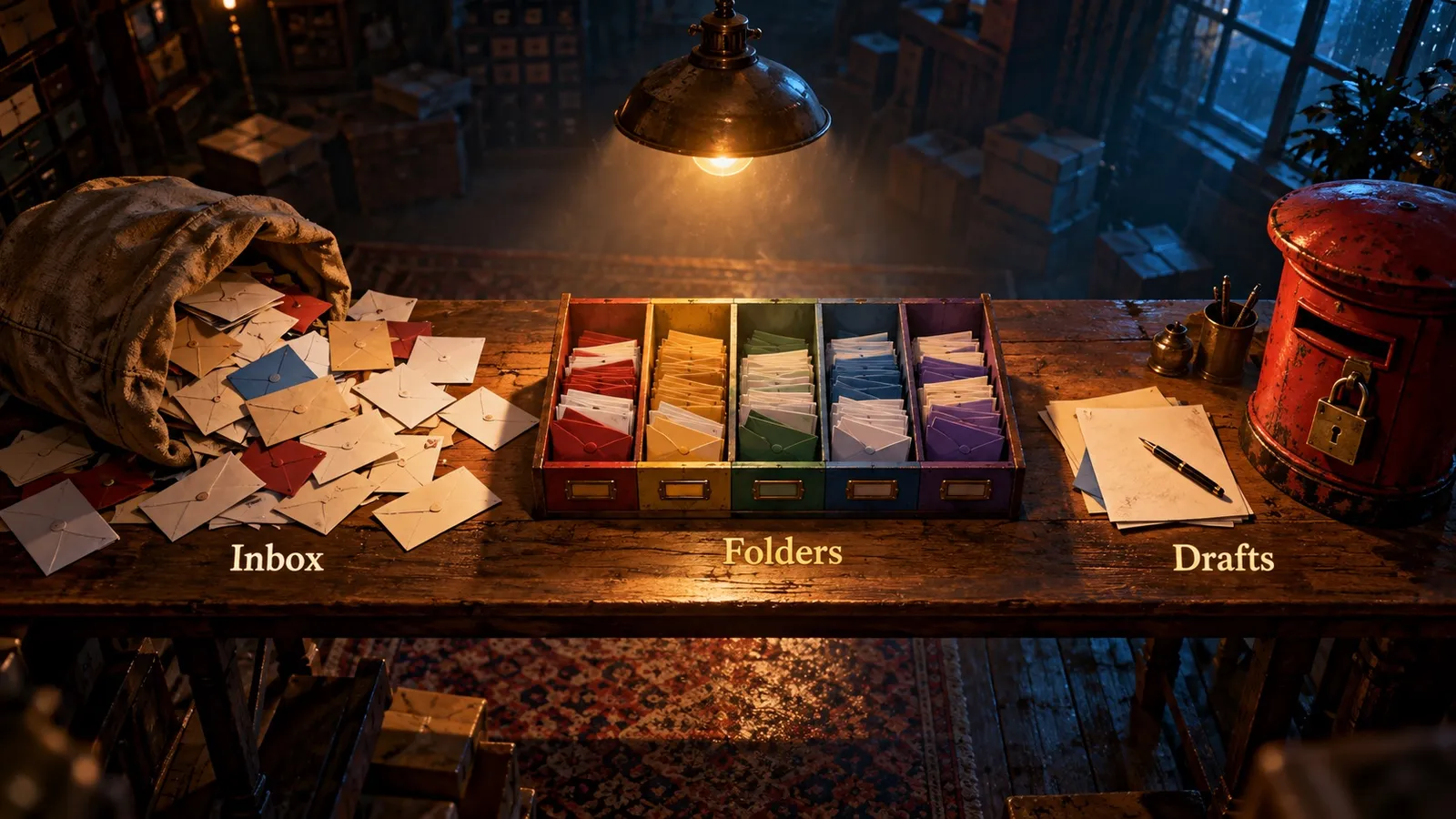
Inbox Zero sweeps a Gmail or Microsoft 365 inbox, sorts each thread into a short list of folders the owner chose, flags the few that need a person today, and writes a short digest of what it did. For threads that need an answer, it writes a first draft in the owner's own voice and leaves it in the Drafts folder.

The problem
A small-business inbox mixes client work, vendor invoices, notices and newsletters. Sorting it and starting replies from a blank box takes time away from the messages that actually need the owner. Most AI mail tools ask for broad mailbox access, including send, and offer a promise in place of a control an IT person can check.
How it works
The kit is a set of markdown skills (triage, voice profile, reply drafts) plus a self-adapting installer.md that any host AI reads to install the kit for its own platform. The skills drive a local MCP server, the connector in connector/, which runs on the owner's machine with the owner's own OAuth grant. The host AI decides which message goes where and writes the words of a reply; the connector performs every mailbox action, validates each filing against a closed folder list, picks the voice from a fixed rule table, and writes the ledger row itself as a side effect of each successful action. The AI never calls a mail API and has no tool to write or skip the ledger.
Features
- Ten MCP tools: list and survey the inbox, read a thread, read a sent-mail sample the owner selected, look up voice routing, file a message, record a correction, mark important, create a draft, and read the daily digest
- Closed folder list: the AI can only file into folders configured at install, so a hostile email's worst case is misfiling itself
- Ledger and undo: one row per action, never edited
- Uncertain items go to Action Needed and are listed in the digest with the reason
- Voice profile: built only from sent mail the owner points at, written as a page of patterns with no quoted sentences, client names or figures, and used only after the owner reviews it
- Missing-fact gate: if a reply needs a price, date or decision the owner has not given, drafting stops and asks
- No-send enforcement stated per provider
- Two build tiers from one codebase: basic (filing only, voice module not shipped) and enhanced (adds voice profile and reply drafts)
How it was built
Inbox Zero started on 2026-08-17 at the request of a security-minded managed service provider that wanted email triage help on its own mail first. The goal was an assistant that files and drafts but provably cannot send.
The no-send guarantee was placed in the OAuth scopes the connector requests. Research then found Gmail has no scope that allows drafts without also allowing send, so on Gmail the guarantee moved into code and the docs said so the same day.
Filing rules, learned corrections and the draft quality gate were written as code and data tables. A model classifies mail and writes a draft body, and deterministic gates refuse its output rather than repair it. Every move is journalled by the connector, never by a tool the AI can call.
AI coding agents built it from a written spec and later from numbered issues worked as separate lanes. Review ran in rounds with different reviewer roles, and round 6 reverted a round-4 header-parsing change that let one malformed header poison a whole thread.
The first beta installs exposed packaging faults such as shell-specific installer paths and a keychain entry keyed per provider instead of per mailbox. Those were fixed and covered by installer tests, and a live soak proved token refresh against a real mailbox.
Rico kept the person in charge of every send. The kit reached version 0.2.15 with 2,718 tests and is in pilot use.